

Suzhou, China, June 17, 2026—CStone Pharmaceuticals (“CStone,” HKEX: 2616), an innovation-driven biopharmaceutical company focused on the research and development of therapies for oncology, immunology, inflammation, and other key disease areas, today announced that its Model-Informed Drug Development (MIDD) and European dose-bridging research for sugemalimab, the Company’s proprietary PD-L1 antibody, has been published in leading clinical pharmacology journals from both industry practice and regulatory perspectives. Furthermore, the research has been cited by United Kingdom's Medicines and Healthcare products Regulatory Agency (UK MHRA) as a high-impact exemplar case of MIDD supporting regulatory review and decision-making. These achievements validate the scientific value of the MIDD methodologies in enabling differentiated global development strategies, and establishes a reproducible methodological framework for the international registration of future pipeline assets.
Dr. Jason Yang, CEO, President of R&D, and Executive Director at CStone, commented: "The overseas regulatory approvals of sugemalimab is the result of highly efficient collaboration across CStone's clinical development, clinical pharmacology, biometrics, medical and regulatory teams. Addressing the differences between European patients and the Asian pivotal-study population, we built and validated MIDD models based on systematically accumulated pharmacokinetic (PK), efficacy, and safety data, conducted extensitve simulations, and ultimately developed a dose-bridging strategy that was accepted by European and UK regulatory authorities. This case demonstrates that Chinese innovative pharmaceutical companies are fully capable of engaging in high-quality scientific dialogue with overseas regulatory agencies on complex issues using internationally recognized scientific standards. Going forward, CStone will continue to advance more differentiated innovative therapies to benefit patients worldwide."
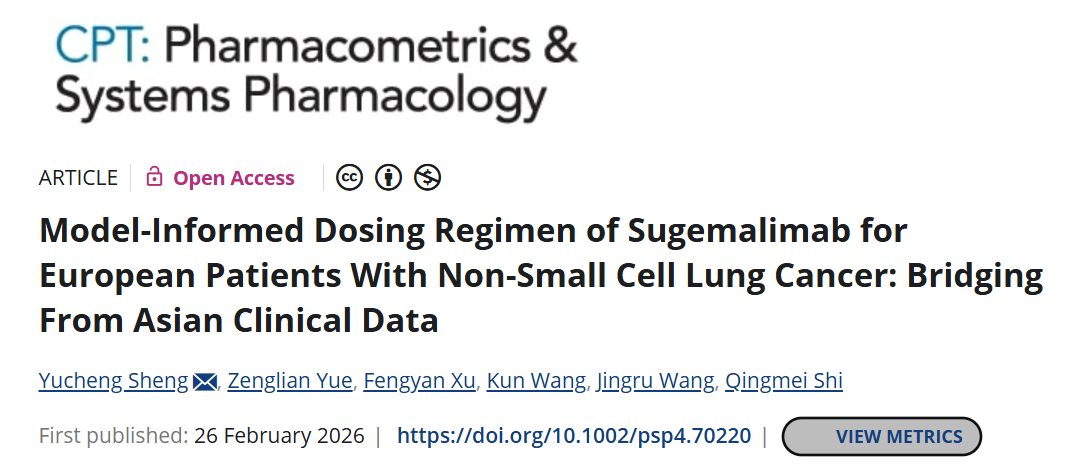
In February 2026, the CStone team published a research article in CPT: Pharmacometrics & Systems Pharmacology systematically elucidating how sugemalimab's European dosing regimen was established through population pharmacokinetic (PopPK) modeling, exposure-response analysis, and simulation.¹
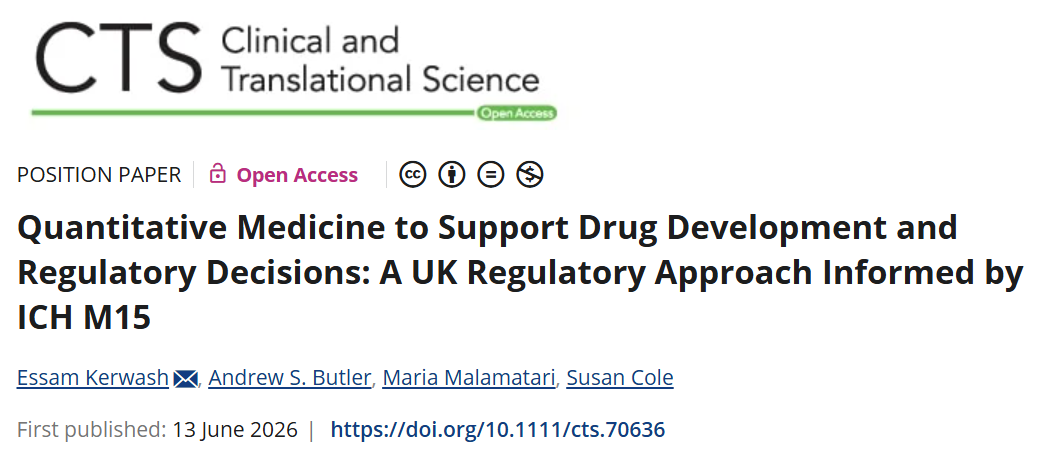
Recently, experts from the UK MHRA published an article in Clinical and Translational Science, highlighting sugemalimab as a high-impact decision-making case study in the application of MIDD to support drug regulatory review. The article illustrated how quantitative pharmacology models can support real-world regulatory decisions based on clearly defined contexts of use, assessment of model influence, and evaluation of the consequences of incorrect decisions.²
The dosing regimen approved for sugemalimab in Europe and the UK is 1200 mg every three weeks (Q3W) for patients weighing ≤115 kg, and 1500 mg Q3W for patients weighing >115 kg. Notably, the 1500 mg dose was not investigated in the pivotal Phase III GEMSTONE-302 study, but was established based on a comprehensive MIDD evidence package and endorsed by both the European Medicines Agency (EMA) and the UK MHRA. Through this approach, sugemalimab achieved a scientifically rigorous bridging from Asian pivotal clinical data to a European patient dosing regimen without the need for an additional dedicated overseas clinical trial, thereby significantly enhancing global development efficiency.
References:
1. Sheng Y, et al. Model-Informed Dosing Regimen of Sugemalimab for European Patients With Non-Small Cell Lung Cancer: Bridging From Asian Clinical Data. CPT: Pharmacometrics & Systems Pharmacology. DOI: 10.1002/psp4.70220
2. Kerwash E, et al. Quantitative Medicine to Support Drug Development and Regulatory Decisions: A UK Regulatory Approach Informed by ICH M15. Clinical and Translational Science. DOI: 10.1111/cts.70636
About Sugemalimab
The anti-PD-L1 monoclonal antibody sugemalimab was developed by CStone using OmniRat® transgenic animal platform, which allows creation of fully human antibodies in one step. Sugemalimab is a fully human, full-length anti-PD-L1 immunoglobulin G4 (IgG4) monoclonal antibody, which may reduce the risk of immunogenicity and toxicity for patients, a unique advantage over similar drugs.
The EC and MHRA have approved sugemalimab for two indications:
The National Medical Products Administration (NMPA) of China has approved sugemalimab for five indications:
ESMO Guidelines recommend sugemalimab [I, A] for:
About CStone
CStone (HKEX: 2616), established in late 2015, is an innovation-driven biopharmaceutical company focused on the research and development of therapies for oncology, immunology, inflammation, and other key disease areas. Dedicated to addressing patients’ unmet medical needs in China and globally, the Company has made significant strides since its inception. To date, the Company has successfully launched 4 innovative drugs and secured approvals for 21 new drug applications covering 9 indications. The company’s pipeline is balanced by 16 promising candidates, featuring antibody-drug conjugates (ADCs), multispecific antibodies, immunotherapies and precision medicines. CStone also prides itself on a management team with comprehensive experiences and capabilities that span the entire drug development spectrum, from preclinical and translational research to clinical development, drug manufacturing, business development, and commercialization.
For more information about CStone, please visit: www.cstonepharma.com.
IR contact: ir@cstonepharma.com
PR contact: pr@cstonepharma.com
Forward-looking statements
The forward-looking statements made in this article only relate to events or information as of the date when the statements are made in this article. Except as required by law, we undertake no obligation to update or publicly revise any forward-looking statements, whether as a result of new information, future events or otherwise, after the date on which the statements are made or to reflect the occurrence of unanticipated events. You should read this article completely and with the understanding that our actual future results or performance may be materially different from what we expect. All statements in this article are made on the date of publication of this article and may change due to future developments.
Disclaimer: only for communication and scientific use by medical and health professionals, it is not intended for promotional purposes.


Your privacy is important for us. We use cookies to enhance your experience when visiting our websites: performance cookies show us how you use this website, functional cookies remember your preferences and targeting cookies help us to share content relevant to you. Select “Accept all” for giving your consent to all cookies or select “Reject all” for using only strictly necessary cookies.


